From Numidian bronzes to the dinar of 1964 and modern banknotes: an illustrated history of money in Algeria.
Before the dinar: money in the ancient kingdoms
A royal head, a horse, a few Punic letters: Numidian bronzes make a history far older than the dinar tangible. In ancient North Africa, coastal trading centres, inland kingdoms and Mediterranean powers belonged to networks extending well beyond the borders of present-day Algeria. Calling every such object “Algerian money” in the modern national sense would be anachronistic.
Under Masinissa, ruler of unified Numidia from 202 to 148 BCE, and his successors, royal coinage asserted authority. Portraits and horses are characteristic motifs. Yet short legends and the absence of dates can make individual issues difficult to attribute: catalogues may prefer “Masinissa or Micipsa” to a definite identification. A similar-looking portrait does not settle the question.
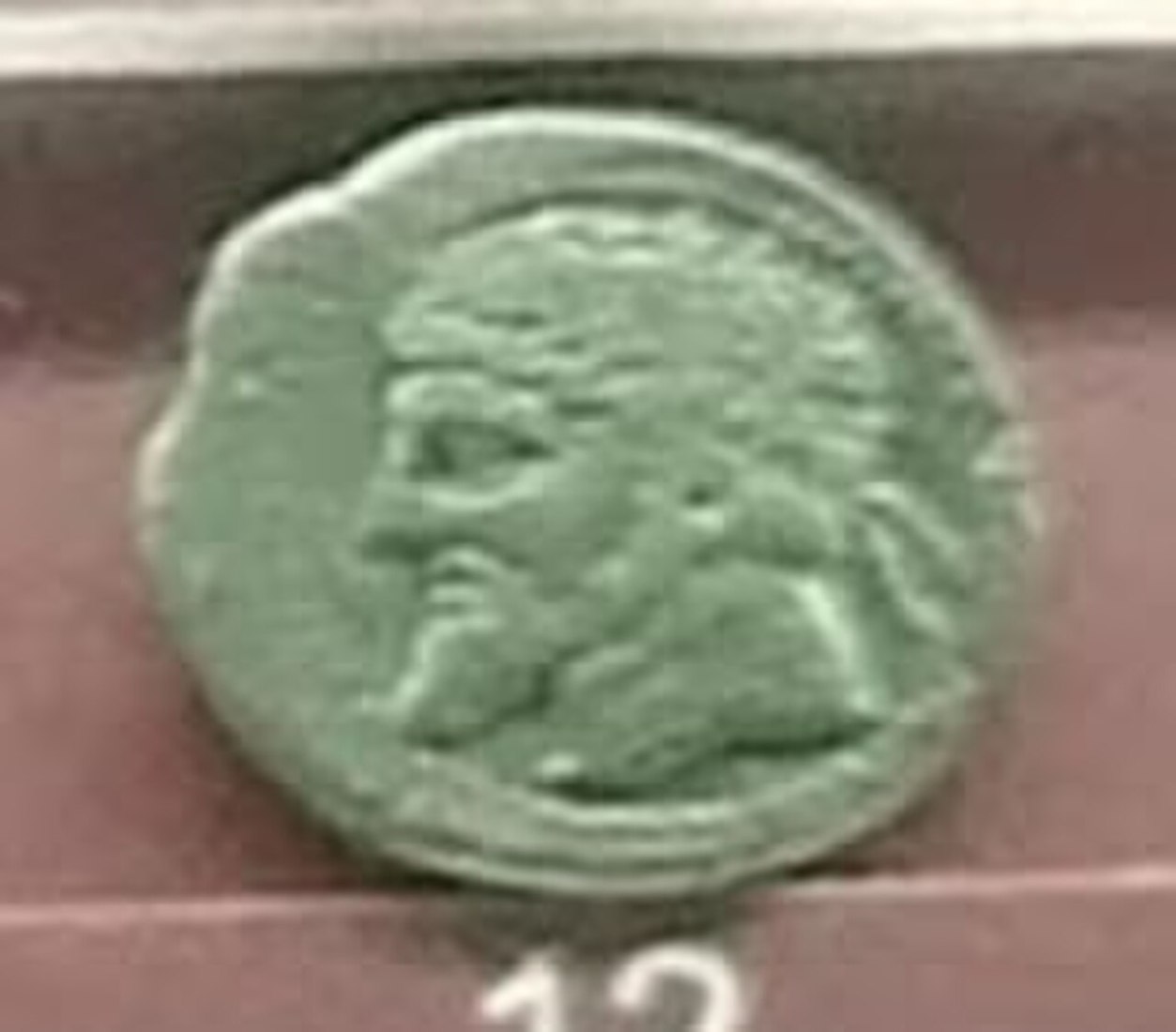

Within the Roman world, imperial coins served taxation, military pay and exchange. The kingdoms of Numidia and Mauretania did not correspond to modern states: ancient Mauretania should particularly not be confused with today’s Mauritania. This historical depth helps explain why modern issues can invoke a horse, a ruler or an ancient monument without restoring an earlier currency.
[1]Gold, silver and writing: medieval coinages
As Muslim powers became established in the Maghreb, coinage entered different political and religious traditions. The gold dinar and silver dirham became major reference points, without producing one uniform system across every period and region. Weight, fineness, mint and issuing authority all affected how a coin was valued.
Writing occupied a central place. A coin might carry a ruler’s name, a declaration of faith, a date or a mint name. Such inscriptions performed a role that portraits played elsewhere: they made the authority behind the piece visible. Almohad issues also show how geometric forms and the arrangement of writing could communicate political meaning rather than merely provide decoration.
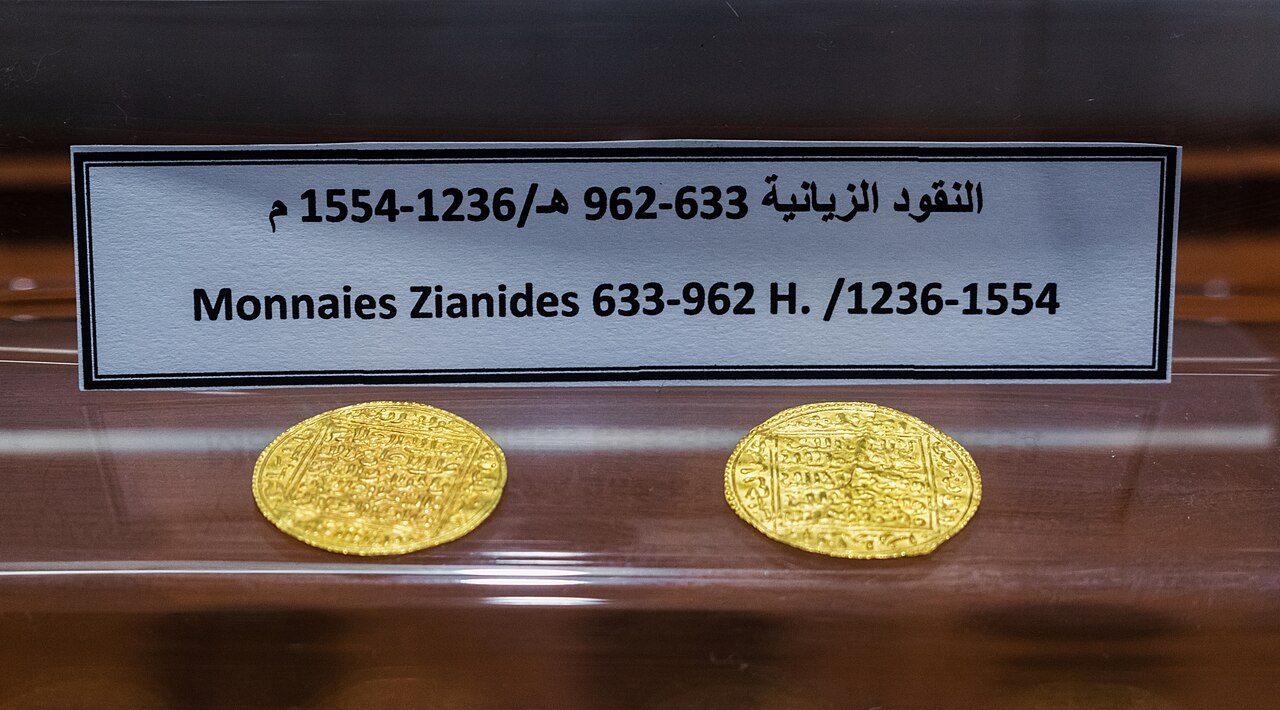

At Tlemcen, Zayyanid rulers struck coins within a world connected to other Maghrebi cities and trans-Saharan routes. Gold pieces displayed in Algiers bear witness to that activity. A dynasty’s name, the place where an object is held and its actual mint are different kinds of information: a coin’s presence in an Algiers museum does not establish that it was minted in Algiers.
Medieval money can therefore be read on several levels. It is a metal object, a portable inscription and an instrument of exchange. When the name dinar returned in 1964, it renewed a regional linguistic and cultural inheritance; it did not revive the weight of any particular medieval coin.
[2]The Regency of Algiers: minting money in a maritime world
During the Ottoman period, Algiers had its own mint, the Dâr al-Sikka. Local issues circulated in a setting that also brought in coins from other Mediterranean shores. The silver budju, often written boudjou in French, is among the most recognisable witnesses to this history.
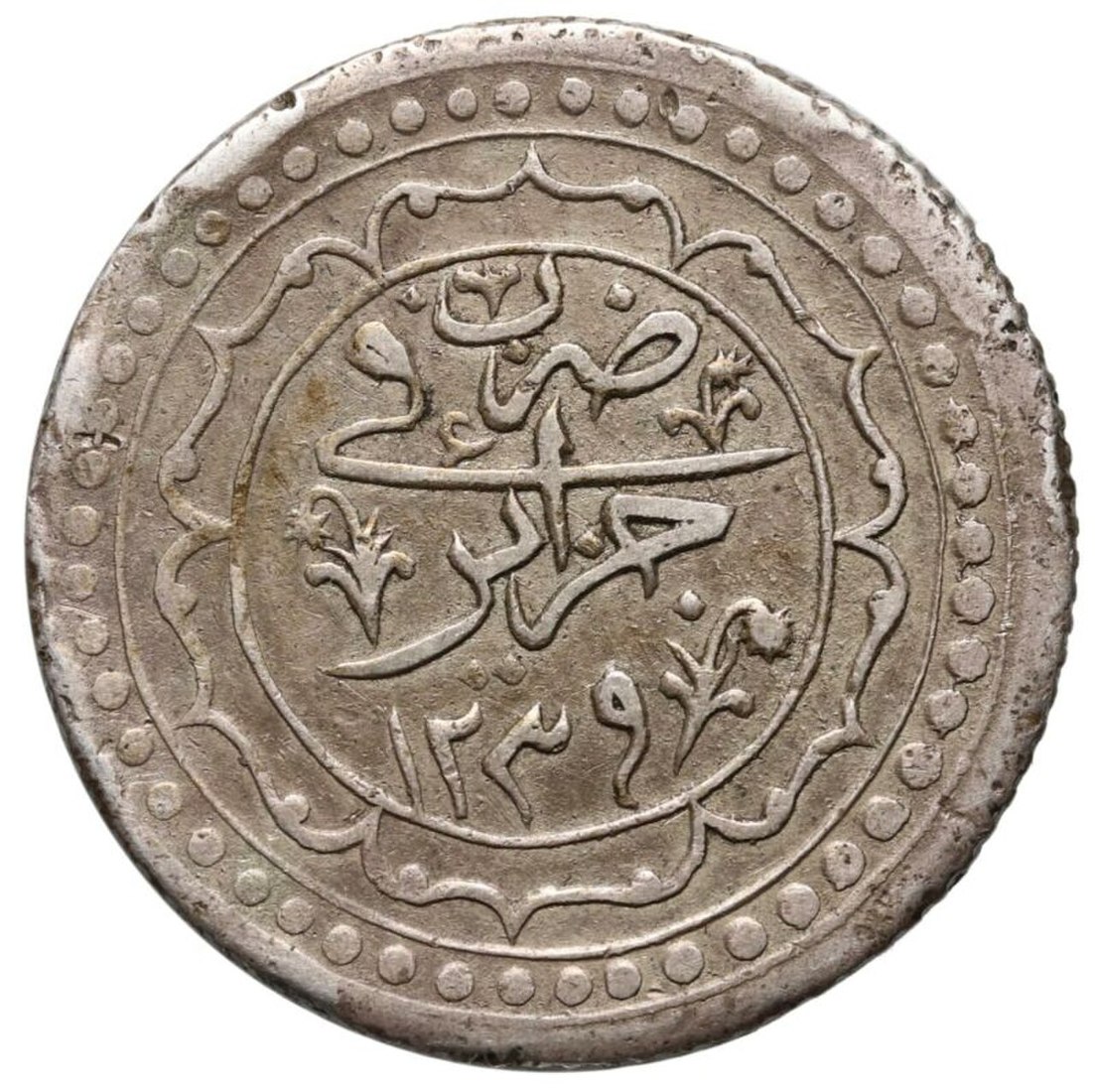

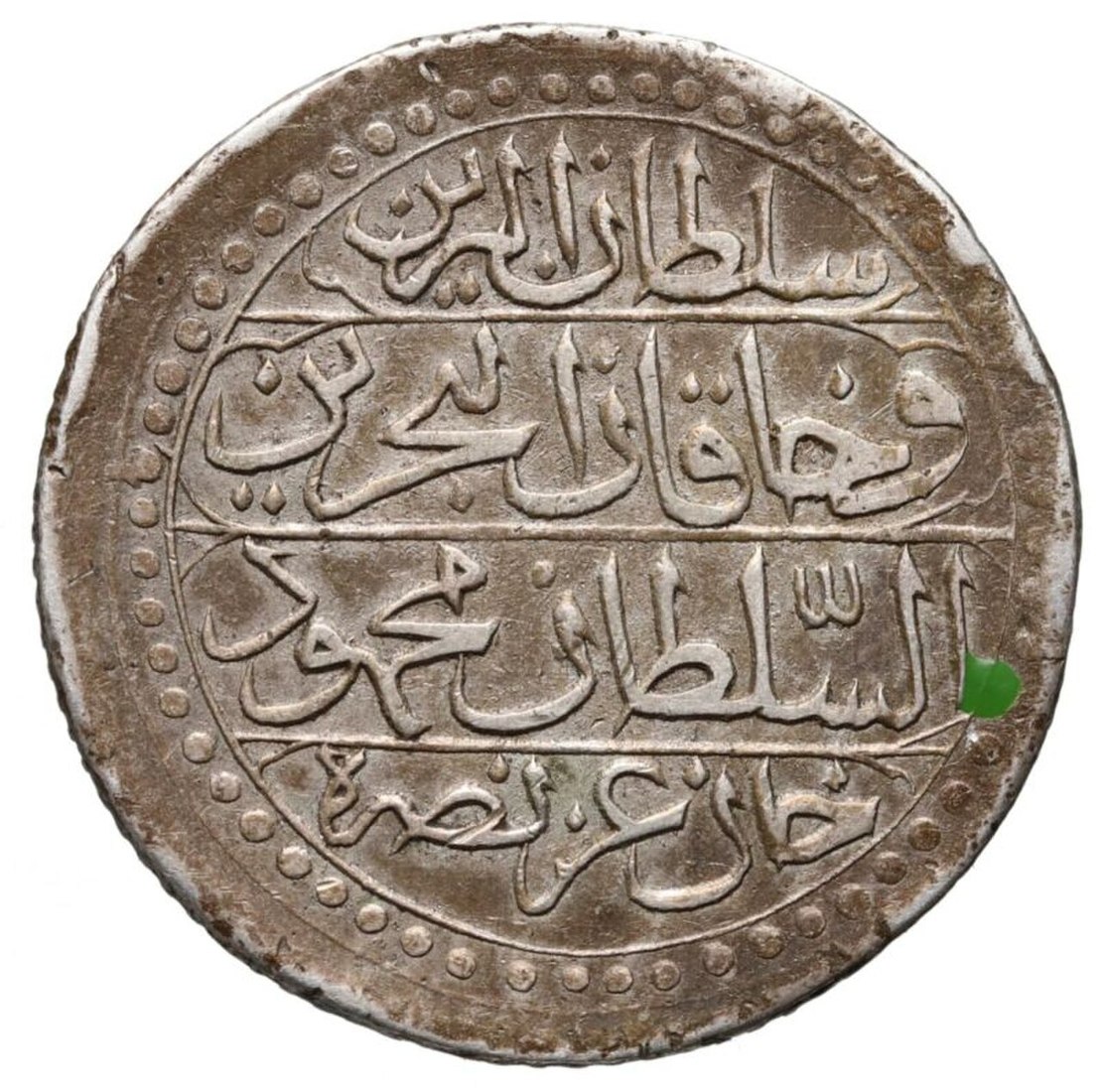

The two sides illustrated combine Arabic legends, a Hijri date and recognition of Ottoman authority. A sultan’s name, however, does not make every issue within the empire part of a single interchangeable currency. Identifying a piece still requires its mint, denomination and metallic characteristics.
The date AH 1239 calls for care. The lunar Hijri year does not begin with the Gregorian year and may overlap two of them. The commercial shorthand “1824” is convenient, but “AH 1239 / 1823–24” describes the evidence more accurately. Mechanically assigning each Hijri date to a single Gregorian year can create misleading precision.
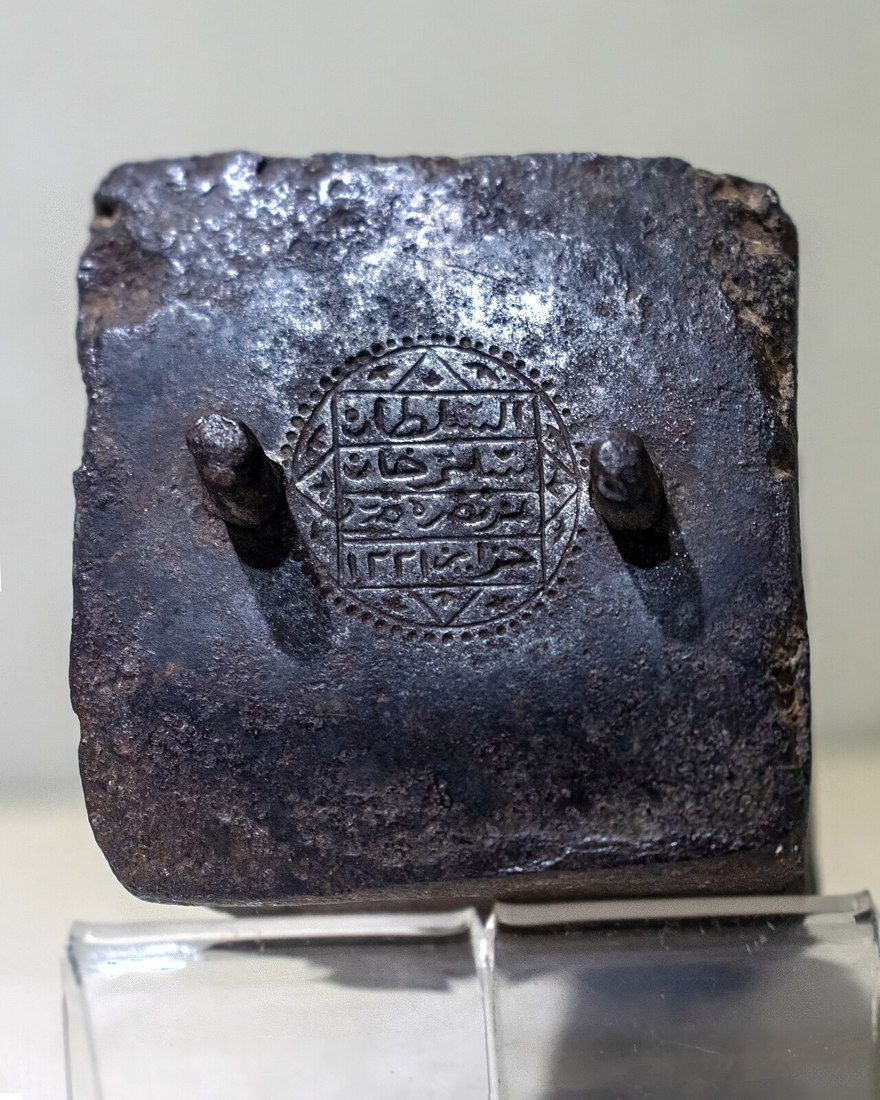

The surviving die recalls another part of the story: before becoming a store of value, a coin requires an engraved tool, prepared metal and a striking operation. Differences between specimens do not all result from wear. Tooling, centring and striking force can each leave their signature on the object. Looking at its edge and lettering reveals a history of skilled work as well as a history of authority.
[3]Abd el-Kader: money for government and resistance
The French landing of 1830 and the capture of Algiers began a prolonged conquest. The older monetary order did not disappear everywhere at once. In the territories he organised, Emir Abd el-Kader built an administration and an army; minting money formed part of that effort. The Mucem presents coinage among the institutions of an authority taking shape in resistance to French conquest.
Money connected practical tasks: collecting resources, paying men, purchasing supplies and securing recognition of authority. It was more than an emblem. Its usefulness depended on the organisation issuing it and on the confidence of those accepting it. Issues associated with Tagdemt, the emir’s capital, give this political undertaking a material form.
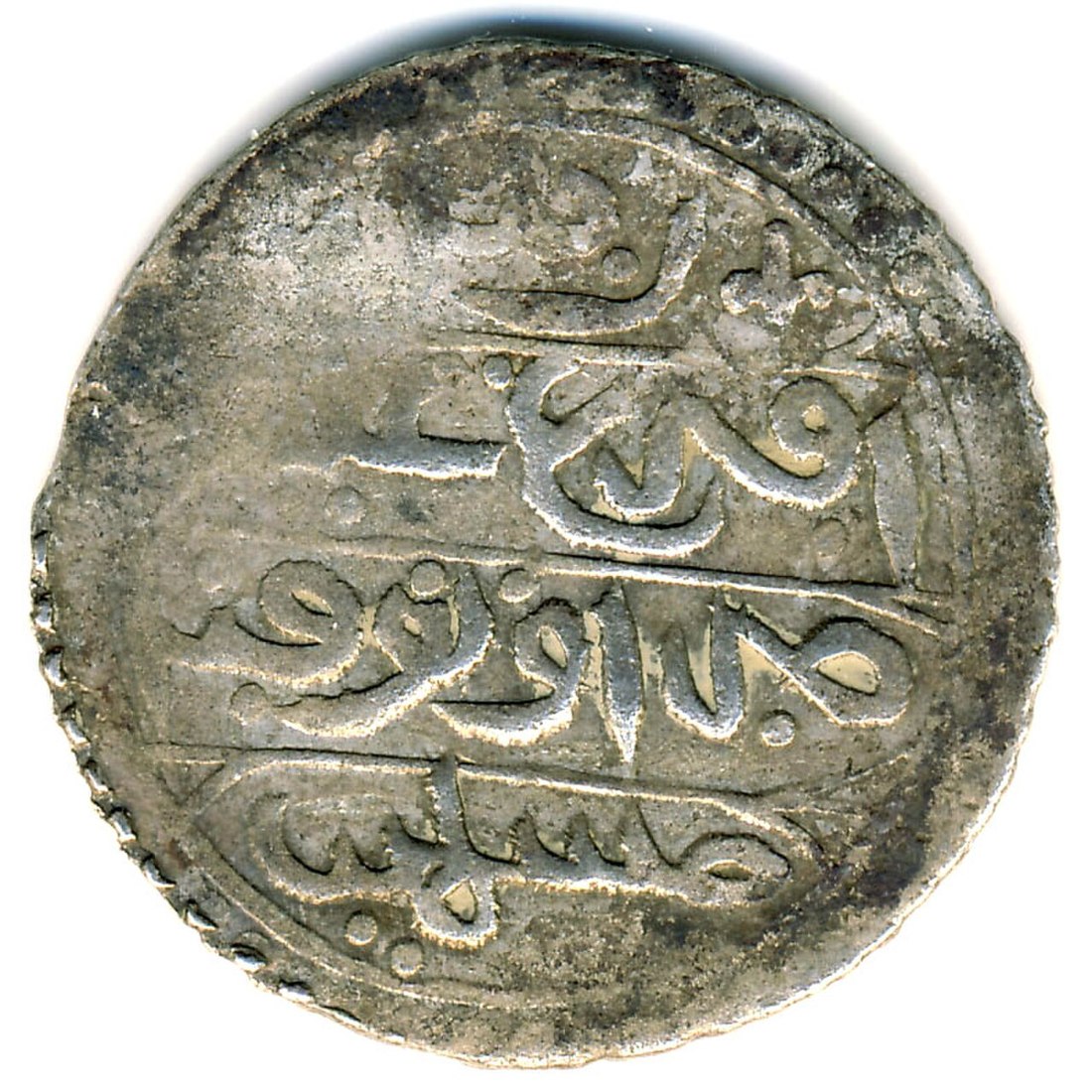

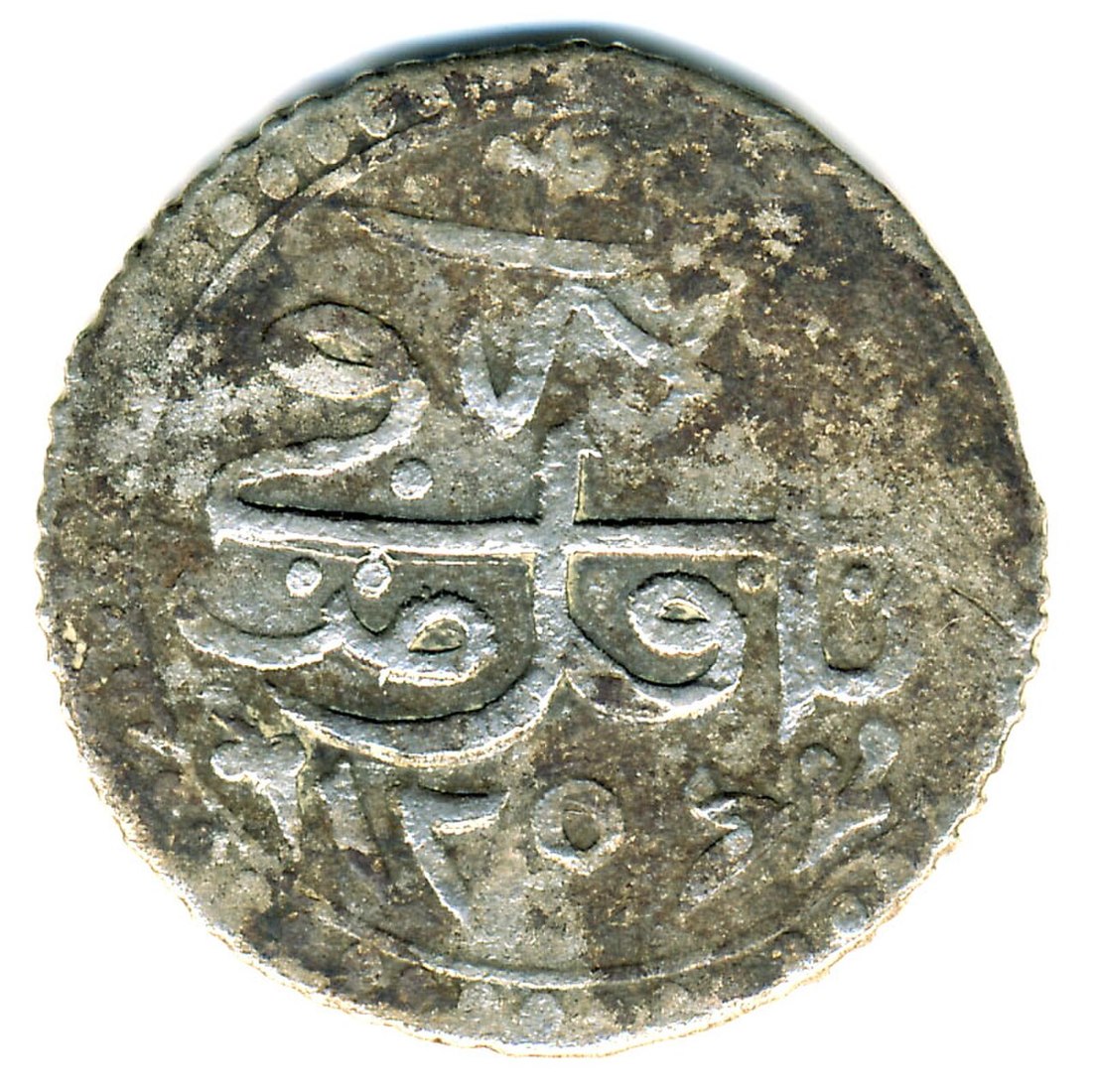

The AH 1256 budju shown here belongs to that distinct history. It is neither a modern dinar nor an issue of the Algerian republic. This distinction matters: discussing monetary sovereignty does not require erasing the difference between the emir’s nineteenth-century authority and the independent state of the twentieth century.
Abd el-Kader would reappear much later in dinar watermarks and security features. Between the coins he had struck and the portrait used to identify a modern banknote, the same historical figure changes function: first an issuing authority, later a reference to the national past.
[4]The franc and the colonial bank: new units, new images
The extension of French rule gradually established the franc and colonial institutions. A precise milestone is the law of 4 August 1851, which created the Banque de l’Algérie. This note-issuing bank must be distinguished from the national central bank established after independence: similar names conceal a fundamental political and legal break.
Paper money allowed substantial payments without carrying an equivalent quantity of metal. Its circulation depended on the issuer, payment arrangements and legal recognition. Printed promises, signatures and numbering helped establish confidence, while images gave that promise a familiar and imposing appearance.
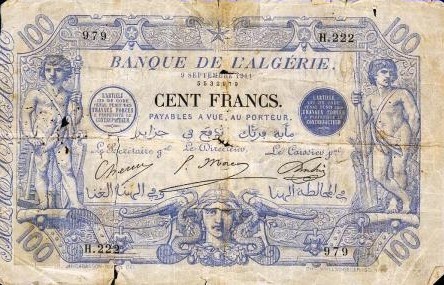

On the 100-franc note dated 1911, allegorical figures and a symmetrical composition belong to a European visual vocabulary. This imagery should be read in its colonial setting: it expresses the issuing institution’s categories rather than providing a neutral portrait of all inhabitants and their experiences. Appreciation of the engraving can coexist with a critical reading of its context.
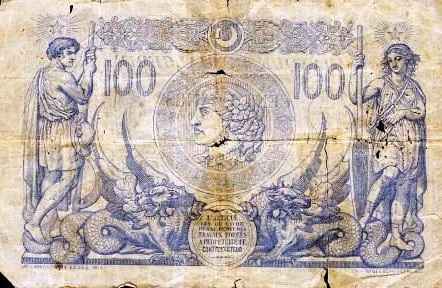

The bank’s scope changed over time. It extended its operations to Tunisia in 1904, adopted the name Banque de l’Algérie et de la Tunisie in 1949, and became Banque de l’Algérie again in 1958. These changes explain the different issuer names found on older notes. They should not be mistaken for successive creations of an independent Algerian national currency.
[5]1962–64: independence acquires a monetary unit
Political independence in 1962 began the construction of national institutions. Notes already in tills and wallets were not replaced that same day. Payments had to continue while a new issue was prepared. The law of 13 December 1962 created the Central Bank of Algeria; the institution therefore existed before the dinar.
On 10 April 1964, Law No. 64-111 established the Algerian dinar, divided into one hundred centimes. It replaced the new franc at parity: one dinar for one new franc. This initial equivalence organised the transition between units; it did not promise permanent parity with French money. The law also defined the dinar as 180 milligrams of fine gold, a formulation belonging to the international monetary order of the period, rather than a promise that every note could be redeemed for gold over the counter.
For the state, a national unit and issuing institution meant responsibility for organising currency circulation. For the population, the change was tangible: recognising new notes, understanding familiar amounts expressed in a new unit, and exchanging older cash. Sovereignty became an everyday action.
[6][7]The first dinars: a country held in the hand
The first banknote family, issued in 1964, comprised four denominations: 5, 10, 50 and 100 dinars. The Central Bank of Algeria selected landscapes from both the north and south. The notes brought the country’s geographical variety into everyday transactions. A shared national unit could be expressed through several different horizons.
This approach differed from colonial allegory: the national issuer now placed its own territory within ordinary payments. The scenes were more than travel illustrations. On a new currency they helped establish a shared identity in a country with markedly different landscapes, activities and distances.
Small coins completed the system. Money does not function through large notes alone: it must support modest purchases and the giving of change. The relationship of one hundred centimes to one dinar supplied a clear decimal scale, although the practical importance of small coins would change as prices evolved.
A collector’s banknote nevertheless calls for several distinct readings. Its printed date, the decision creating the type, first circulation and eventual withdrawal are separate events. Wear, signatures and variants can document an object’s life without changing its unit of account. The first four denominations mark the dinar’s beginning, rather than an unchanging list of Algerian notes.
The Bank of Algeria’s notices allow readers to examine all four 1964 notes in their issue context. Recent photographs whose reproduction rights are not established are not reproduced here.
[8]The 1970s: portraying development through art
The family that the Bank of Algeria calls “Industrial Expansion” changed the focus. Landscapes yielded some of their space to the state’s agricultural and industrial ambitions. In the official vision of the period, transforming the countryside and developing production would build the material foundations of independence.
The bank highlights the artistic contribution of M’hamed Issiakhem, a major figure in Algerian painting. His involvement is a reminder that a banknote is a composition governed by particular constraints: an immediately recognisable denomination, imagery legible at small scale, industrial reproduction and resistance to imitation. Artistic design must work with the skills of engravers and printers.
The bank’s historical presentation groups 5-, 10-, 100- and 500-dinar types under 1970, followed by a 50-dinar type under 1978. These are reference points for designs and a thematic family, not a substitute for checking the date of a particular specimen. Collectors’ series rarely fit a chronology assigning just one date to each image.
Producing money also requires national expertise. The Bank of Algeria’s Hôtel des Monnaies embodies this industrial dimension. The issuer determines a note and its characteristics; manufacturing brings together printing, inspection and security skills. Coins are struck, whereas banknotes are printed. The distinction separates two crafts that contribute to the same public confidence.
[9][10]From the 1980s to reform: the dinar endures
The bank next presents a “Construction” family: 100 dinars in 1981, 20 and 200 dinars in 1983, and 10 dinars in 1984. New pictures and additional denominations did not mean that another unit replaced the dinar. The same currency accompanied a changing society.
The oil-price collapse of 1986 weakened external receipts and public finances in an economy heavily dependent on hydrocarbons. Subsequent adjustments to the dinar formed part of these pressures and later of broader reforms. For households, the issue was not simply an exchange-rate figure: it was what earnings could buy and how prices were changing.
The monetary and credit law of 14 April 1990 marked a major institutional stage. In 1994, devaluations accompanied an IMF-supported adjustment programme. This was a socially difficult period unfolding amid violence. Its history requires distinctions between monetary mechanisms, economic policy decisions and lived experience, without reducing Algeria’s story to a crisis.
Continuity of the name and unit explains why very different notes belong to one history beginning in 1964. Their succession reflects payment needs, technical developments and decisions about representation.
[11][6][12]The 1994 coins: prehistory in everyday change
The 1994 coin programme is a numismatic collection in its own right. Regulation No. 94-01 provided for ¼, ½, 1, 2, 5, 10, 20 and 50 dinars. This is a list of denominations created by regulation, not a claim that all retained the same everyday role thereafter.
The 1-dinar coin offers an unusually precise reading. Regulation No. 94-07 set its introduction for 21 November 1994. Made of stainless steel, it has a diameter of 20.50 mm and a nominal weight of 4.20 g. Its numeral 1 is inspired by a Neolithic arrowhead and sits within a map of the country. The other side carries a prehistoric buffalo’s head against rock-art imagery.
This theme connects an ordinary object to a remote past. It does not suggest that prehistoric societies used dinars: it turns their heritage into a shared symbol. The paired Hijri and Gregorian dates also place the coin within two dating systems that readers need to distinguish.
The Atlas lion on the 50-dinar coin adds another dimension to this natural heritage. An animal on a coin can celebrate a remembered fauna without describing its current presence in the wild. Denominations, relief, metal and motifs together form a recognition system. Their significance becomes clearer through comparison than through a simple list of values.
[13][14]The banknote as museum: history, landscapes and security
With the “History and Heritage” family, currency offered several routes into the past. Readers move from prehistory to Numidia, from Islamic history to fighting in the Ottoman period. These are selected themes: a banknote cannot contain the entire history of a territory or every interpretation of it.
| Reference point | Subject | How to read it |
|---|---|---|
| 100 DA · 1992 type | The 1775 battle of El Harrach and the regency’s navy. | The note narrates a military episode through a modern representation. |
| 200 DA · 1992 type | A scene of Quranic teaching. | The transmission of knowledge becomes the central subject. |
| 500 DA · 1990s family | The Numidian period and its landscapes. | An ancient past is interpreted by a modern issuer. |
| 1,000 DA · 1995 issue | Tassili n’Ajjer and rock art. | The prehistoric buffalo connects Saharan landscape and natural memory. |
Watermarks and other security features also contribute to the imagery. They are not necessarily discreet copies of the large printed scene. Comparing the main picture, watermark and an element that changes when tilted reveals several levels of reading. On some late-1990s variants, portraits of Jugurtha and Abd el-Kader entered the holographic devices.
Dates require particular care here. A design year, an issue regulation and a security variant may be several years apart. The series created in 1992 was followed by later issue regulations and modifications. The table therefore identifies themes and design reference points without turning every printed year into a certain first-use date for every specimen.
[15][16]From science to satellites: renewing the imagery of progress
The 2,000-dinar note introduced on 28 April 2011 chose science, technology and development as its theme. The new denomination extended the scale of banknote payments; it did not establish another currency. Abd el-Kader’s portrait appears in the watermark, a feature viewed by transmitted light.
The 2018 500- and 1,000-dinar types continued this dialogue between inheritance and modernity. The 500-dinar note focused on information and communication technologies, including the Alcomsat-1 satellite. The 1,000-dinar design paired the Great Mosque of Algiers with traditional objects. Such choices widened the visual repertoire: heritage could include contemporary achievements as well as ancient remains.
Looking at a banknote means resisting the temptation to see only its largest picture. The denomination must remain readable; background patterns, security thread and watermark belong to a system designed to make the object recognisable. Technology serves two complementary purposes here: depicting progress and protecting a means of payment.
A symbolic date printed on a note need not identify the first day the public received it. Creation and circulation regulations provide different information. Preserving that distinction is more useful in a historical account than listing dates without explaining what each one means.
[17][18]2021–22: faces of independence, paper and polymer
On 18 March 2021, a new 2,000-dinar note placed six historical leaders at centre stage, using the group photograph taken before the start of the liberation war on 1 November 1954: Rabah Bitat, Mostefa Ben Boulaïd, Didouche Mourad, Mohamed Boudiaf, Krim Belkacem and Larbi Ben M’hidi. The composition sets the group against a mountain landscape.
On the reverse, the Imedghassen mausoleum and a foggara bring an ancient monument into conversation with oasis water engineering. The note combines several periods rather than illustrating a single episode. The foggara also recalls that hydraulic techniques involve social organisation, not only physical structures.
The commemorative 2,000-dinar note created in October 2022 for the sixtieth anniversary of independence and the Arab League summit took another approach: a vertical composition, the Maqam Echahid monument, a map of the Arab world and a transparent window. Its reverse brings together, among other features, the Great Mosque, the Hoggar and the ruins of Tipaza. The denomination also appears in English.
Commemoration does not change the unit: two notes of the same value may tell different stories. Creation by regulation, a commemorative issue and withdrawal are also separate events. A new design does not, by itself, mean that earlier ones have disappeared.
[19][20]Reading the dinar: four keys to a long history
The Algerian dinar uses the code DZD and the familiar abbreviation DA. The unit established in 1964 remains this story’s connecting thread. A larger note or a commemorative coin does not create a new scale of accounts. Earlier monetary heritage illuminates that story without becoming indistinguishable from it.
- Identify the issuer. The colonial Banque de l’Algérie and independent Algeria’s central bank belong to different institutional settings.
- Understand each date. A Hijri year, printed date, regulation and first circulation are different pieces of evidence.
- Distinguish object and value. A coin combines metal and relief; a note combines material, printing and security. The unit of account remains an institution.
- Question the picture. A landscape, buffalo or portrait is a choice of representation, not a transparent record of the period depicted.
From a Numidian royal head to the window in the 2022 note, these objects reveal different ways of making authority visible. Independent Algeria’s dinar inherits this long history without simply extending an ancient or Ottoman currency. It turns fragments of that inheritance into an everyday language recognised by the people who receive, count and pass it on.
Sources and credits
All nine photographs are stored locally and remain visible offline. Source links require Internet access. Recent notes are described without reproductions: a photograph’s licence alone does not establish rights to the banknote design. Full credits are recorded in images-manifest.json.
- Catalogues numismatiques : Numidie / Numidian coinageIRIS, American Numismatic Society; Finalborgo museum photograph recorded in the image manifest. Individual attributions are treated cautiously.
- Ashmolean Museum · Heberden Coin RoomAlmohad dinar catalogue record; photograph of Zayyanid coins in the Algiers museum, image manifest.
- Collections · Alger ottoman / Ottoman AlgiersObjects, scans and die photograph individually documented in the credits.
- Mucem · Abd el-Kader, exposition de 2022The emir’s institutions and coinage; see also Mounir Bouchenaki, La Monnaie de l’émir Abd-el-Kader: 1836–1841, BnF record cb345898286.
- Bibliothèque nationale de France · Banque de l’AlgérieFoundation in 1851, extension to Tunisia and changes of name.
- Banque d’Algérie · Histoire de la banqueThe 1962 law and institutional milestones, including the 1990 monetary and credit law.
- Ministère de la Poste · 60e anniversaire de l’unité monétaireOfficial 2024 notice, Law No. 64-111 of 10 April 1964 and the currency change. Legal text: Official Gazette No. 30, 10 April 1964.
- Banque d’Algérie · Premiers billetsFour 1964 denominations and landscapes from the north and south.
- Banque d’Algérie · Essor industrielThematic classification and M’hamed Issiakhem’s contribution.
- Banque d’Algérie · Émission de la monnaieThe issuer’s responsibility and manufacturing controls; Hôtel des Monnaies: 2024 institutional documentation.
- Banque d’Algérie · ÉdificationsThe 1981, 1983 and 1984 types.
- FMI / IMF · Stabilization and Transition to MarketThe 1994 programme and adjustment context. Chapter II of the same volume provides background on the 1986 oil shock.
- Banque d’Algérie · Règlement 94-07The 1-dinar coin: date, metal, dimensions and imagery.
- Journal officiel · 1994, n° 56Regulation 94-01 of 6 April 1994: coin series, including the Atlas lion.
- Banque d’Algérie · Histoire et patrimoineThemes and security features of the 1990s issues.
- Banque d’Algérie · Règlements d’émissionDistinguishes creation in 1992, later issues and the 1998 modifications.
- Banque d’Algérie · Tradition et modernitéThe 2011 note and 2018 types.
- Banque d’Algérie · Règlements 2018Regulations 2018-04 to 2018-08: creation and issue of the 500- and 1,000-dinar notes.
- Banque d’Algérie · Héros de la révolutionIntroduction on 18 March 2021 and interpretation of both sides.
- Banque d’Algérie · Règlement 22-03The 2022 commemorative note: hybrid material, window, composition and inscriptions.