An ancient seal on a coin, a dhow in metal, a school and horses on paper: the Bahraini dinar tells a story much older than its introduction in 1965. It begins among merchants, farmers and seafarers on islands connecting the Gulf with the Indian Ocean.
01Before coins: trust among Dilmun’s merchants
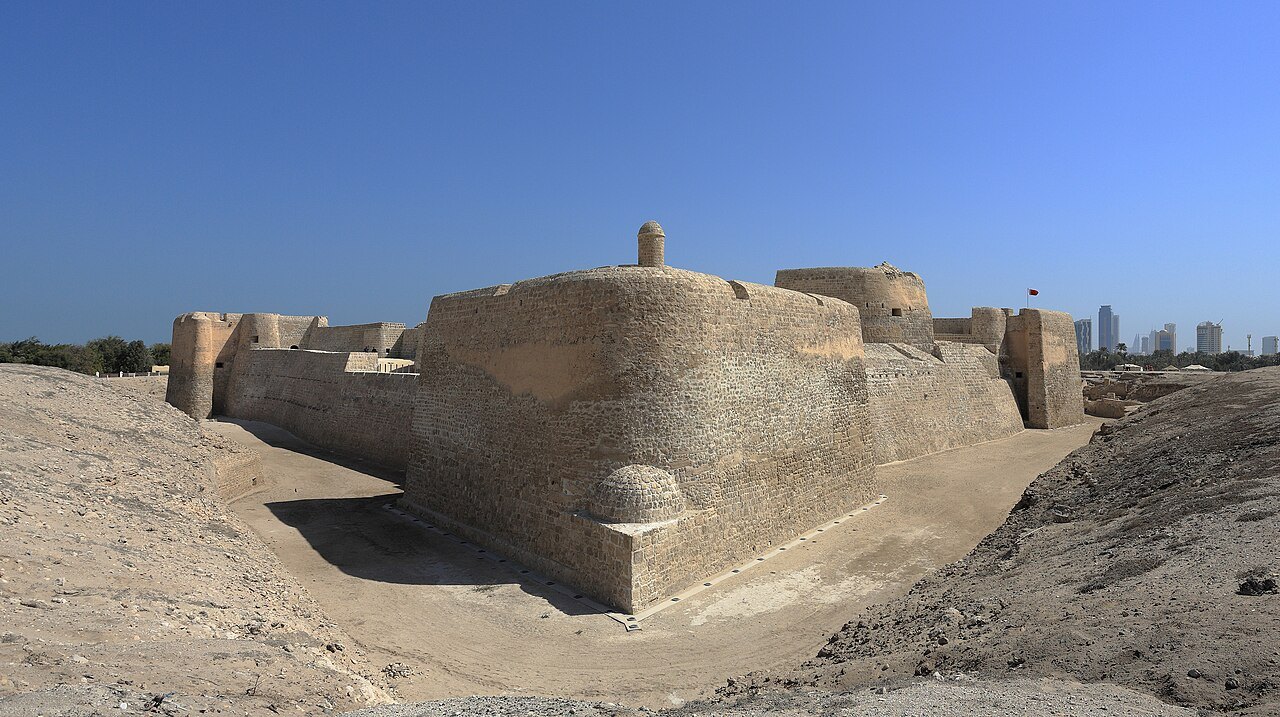
Long before the islands had a national currency, Bahrain occupied a strategic place on the Gulf’s trading routes. At Qal’at al-Bahrain, successive occupation layers reach back to about 2300 BCE. Dilmun’s port connected Mesopotamia, the Arabian peninsula and the Indus Valley. Fresh water, palm groves and access to the sea made the islands valuable places to stop and trade.
There were no little “Dilmun dinars” passing between Bronze Age merchants. These exchanges long predated struck coinage. Wealth moved through goods, measured quantities and commercial relationships, in a world where authenticating a consignment mattered as much as transporting it.
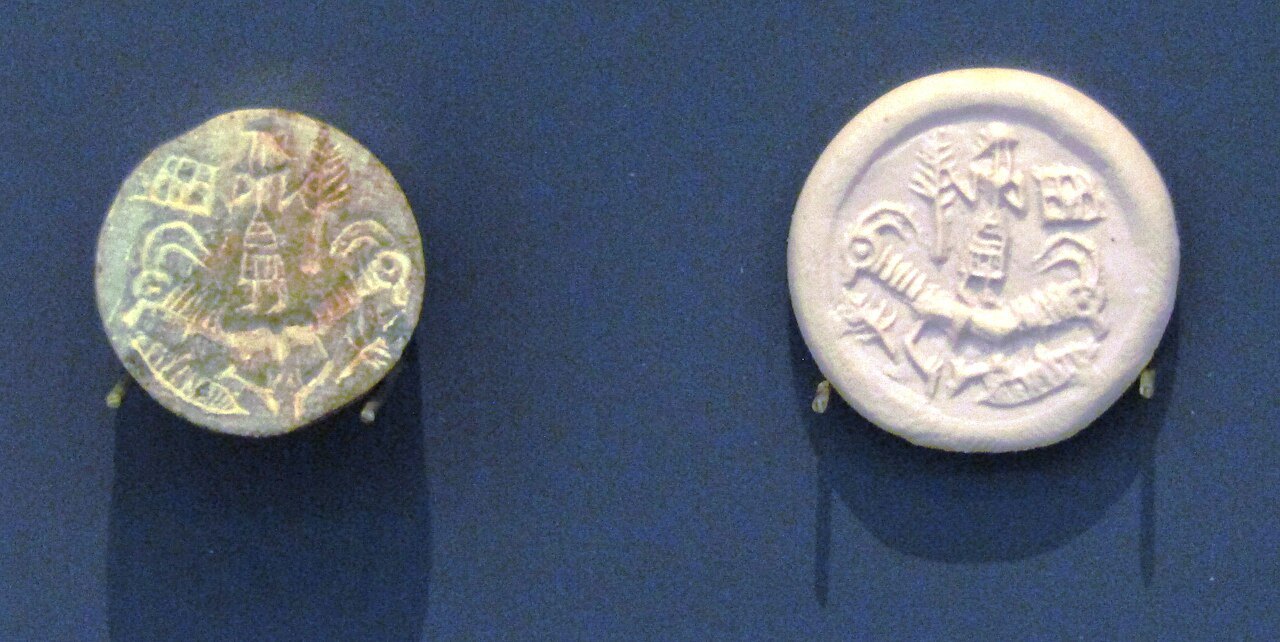

Excavations at the Saar temple produced clay fragments bearing seal impressions, used to close or identify containers and packages. They preserve a practical act of trust: a consignment could be identified, its opening controlled and responsibility made visible. They are evidence of the administration of exchange, rather than proof of coins carrying fixed denominations.
The memory of these seals would eventually reappear on modern Bahrain’s 25-fils coin. That connection does not imply an unchanged currency spanning four thousand years. It shows how a state chooses to give its money a historical identity.
UNESCO · Qal’at al-Bahrain · Crawford & Matthews · Seals and Sealings, Dilmun Temple at Saar
02Tylos and the horizons of ancient coinage
In the Hellenistic period, Greek sources knew Bahrain as Tylos. The island belonged to a trading world shaped first by Seleucid influence and later by Characene, at the outlet of Mesopotamia. Coins travelled with ships, and familiar images could be recognised far from the authority that had first created them.
A hoard discovered in 1970 near Qal’at al-Bahrain’s northern rampart is particularly revealing. The site museum guide describes a jar containing about 310 silver tetradrachms imitating the types of Alexander the Great. “Imitation” need not mean counterfeit: communities could adopt a recognised monetary language to supply acceptable coins for their own trading networks.
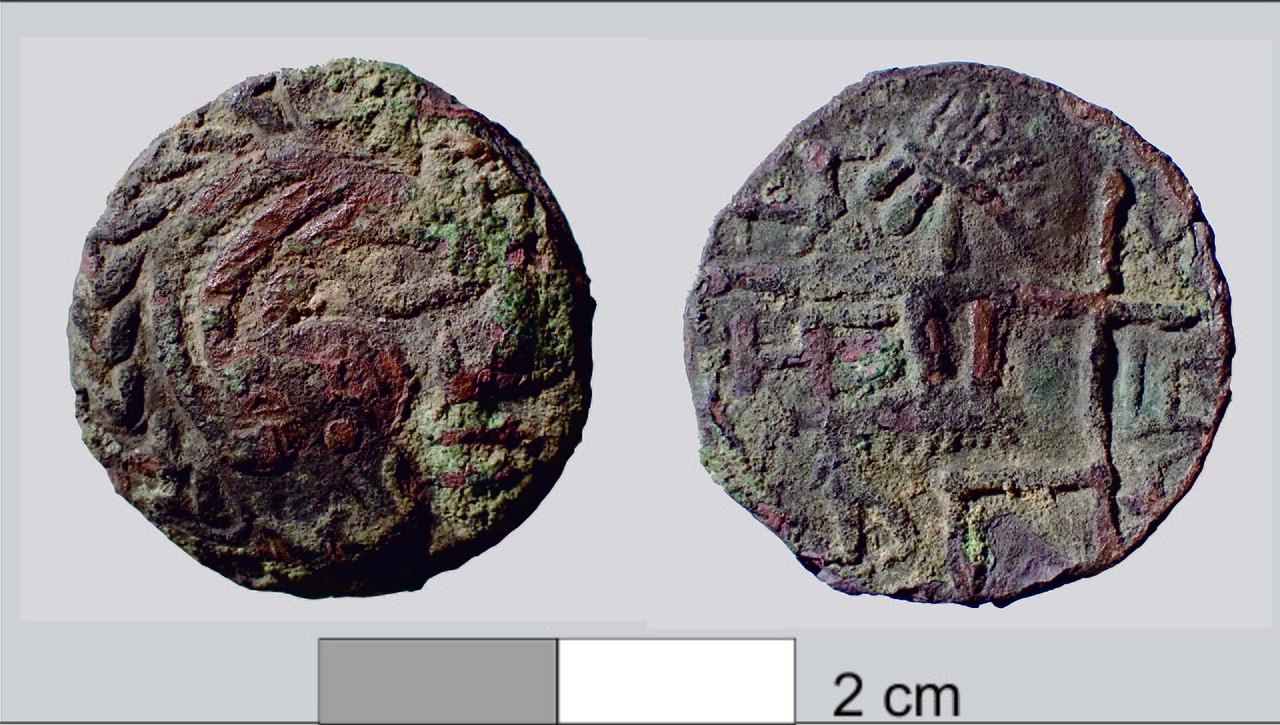

The regional example shown here was found in Oman, not in that Bahraini jar. It helps illustrate how Hellenistic designs were transformed in Arabia. A familiar portrait alone cannot establish a mint attribution: inscriptions, weight, die links and archaeological context need to be considered together.
Islamic rule: new authorities and new inscriptions
As Muslim powers became established in the region from the seventh century, its monetary history became part of the wider Islamic world. Gold dinars, silver dirhams and copper coins belonged to systems whose practical use varied across places and centuries. Inscriptions could identify an authority, a mint or a Hijri date, making the coin itself a historical document.
The modern name “dinar” draws on that long monetary vocabulary. It does not make the currency introduced in 1965 the physical continuation of a medieval coin. Different currencies and political authorities intervened. The Central Bank’s Currency Museum traces this history before and after Islam, followed by the national issues.
Bahrain Authority for Culture and Antiquities · History Timeline · Pierre Lombard · Qal’at al-Bahrain, The Site Museum (2016) · Central Bank of Bahrain · Currency Museum
03Pearls, credit and money from overseas
For centuries, Bahrain’s wealth also depended on something that was never itself a coin: the natural pearl. The merchants’ houses, warehouses and boat departure sites preserved in Muharraq record an economy whose marine harvest financed trade far beyond the islands.
Work began well before any pearls could be sold. Equipping a boat, feeding a crew and supplying divers required resources in advance of the season’s returns. Credit and advances linked merchants, captains and crews. Money therefore meant more than coins changing hands in a market: it also meant claims on a future harvest. These arrangements enabled production but could create lasting dependencies for workers.
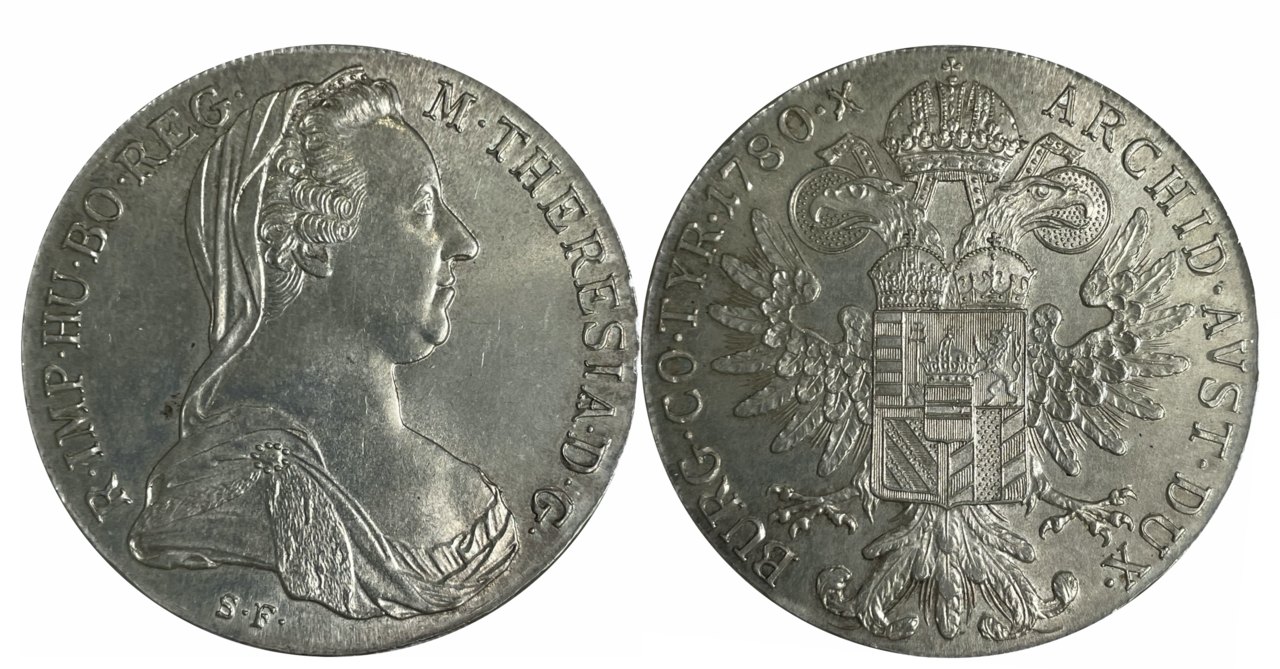

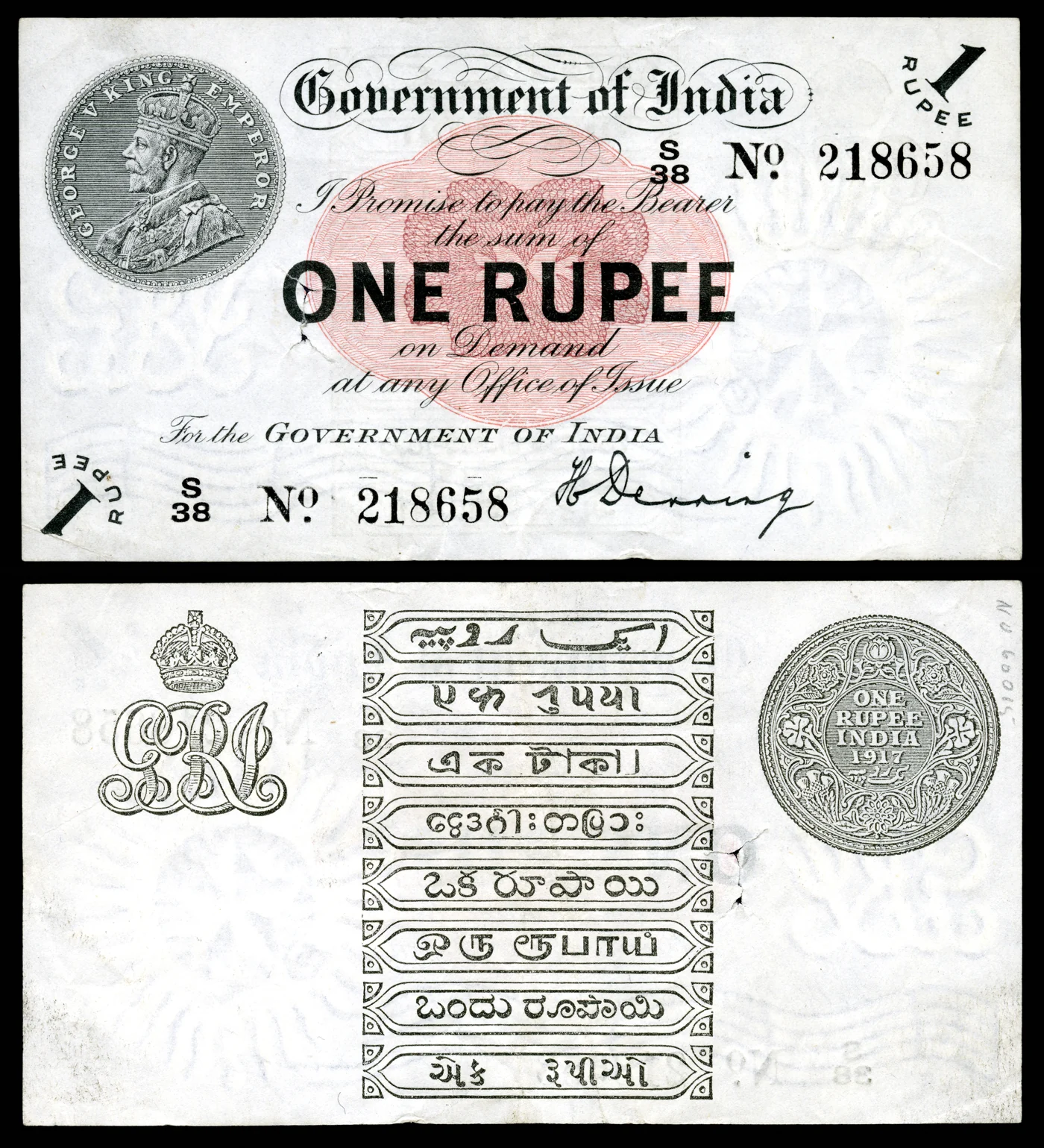
Several currencies accompanied this trade. The Maria Theresa thaler and the Indian rupee both belong to the peninsula’s monetary history. A 1975 IMF study describes how the paper rupee gradually displaced the thaler as the principal currency in several Gulf territories, including Bahrain. Practices did not change everywhere at the same time.
Using foreign money did not necessarily mean being governed by the country that issued it. A coin trusted for its silver, or a note convertible through banks, could cross political boundaries. Merchants’ accounts and connections with Indian ports helped make the rupee a shared commercial language.
The pearling crisis of the 1930s, associated with cultured pearls and the worldwide depression, disrupted this economy. The development of oil opened a different era. Yet the transition from pearls to petroleum did not immediately produce a national currency: rupees remained in use for decades.
UNESCO · Pearling, Testimony of an Island Economy · Bahrain Authority for Culture and Antiquities · History of Pearling
IMF · Currency Arrangements and Banking Legislation in the Arabian Peninsula (1975).
04The Indian rupee and the Gulf rupee
The rupee connected Bahrain’s businesses with the trading centres of India. Silver coins carried the issuing authorities’ names and portraits, while notes allowed larger payments without transporting an equivalent load of metal. Trade brought both forms of money into use, with preferences varying by transaction and period.
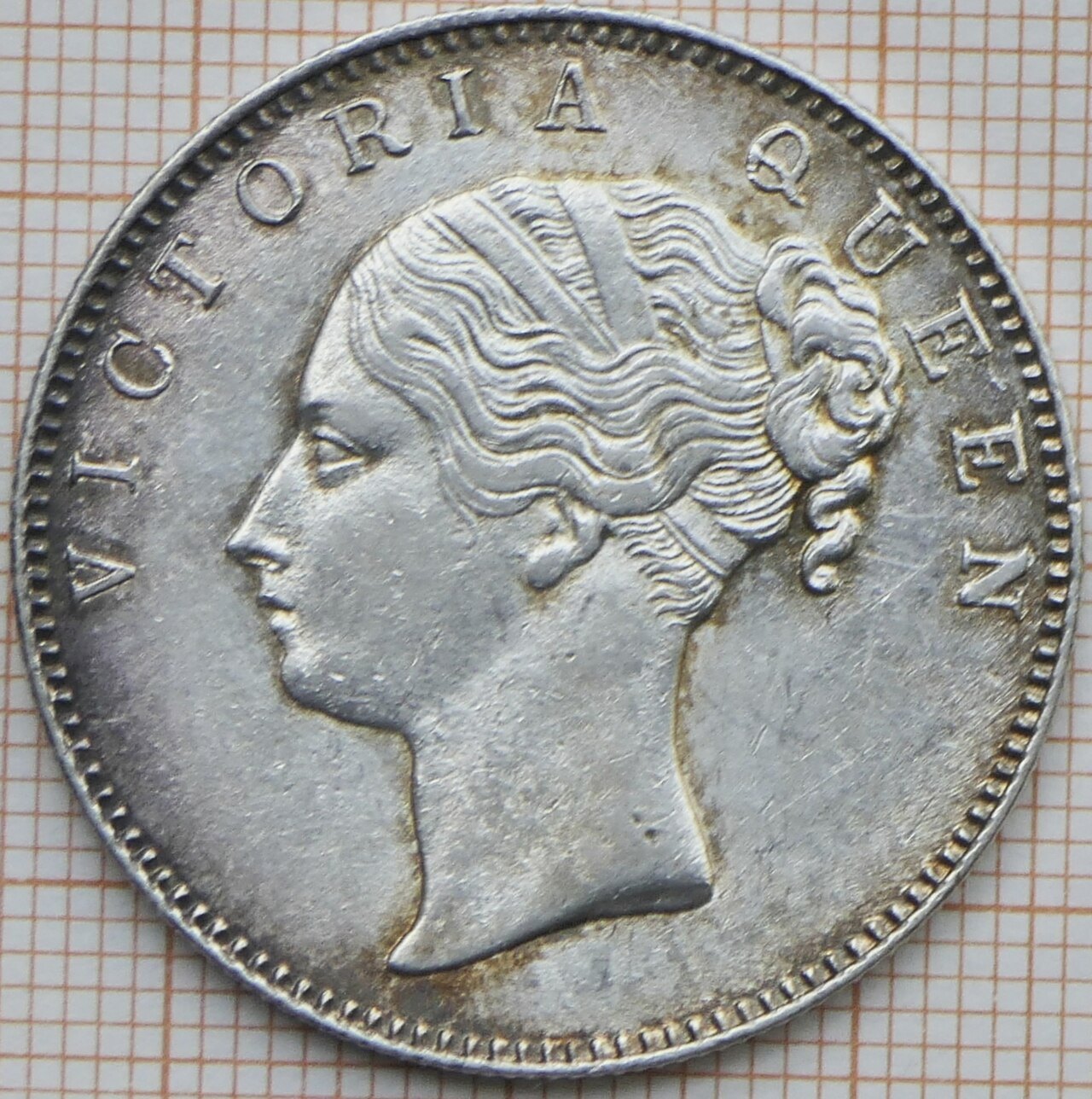

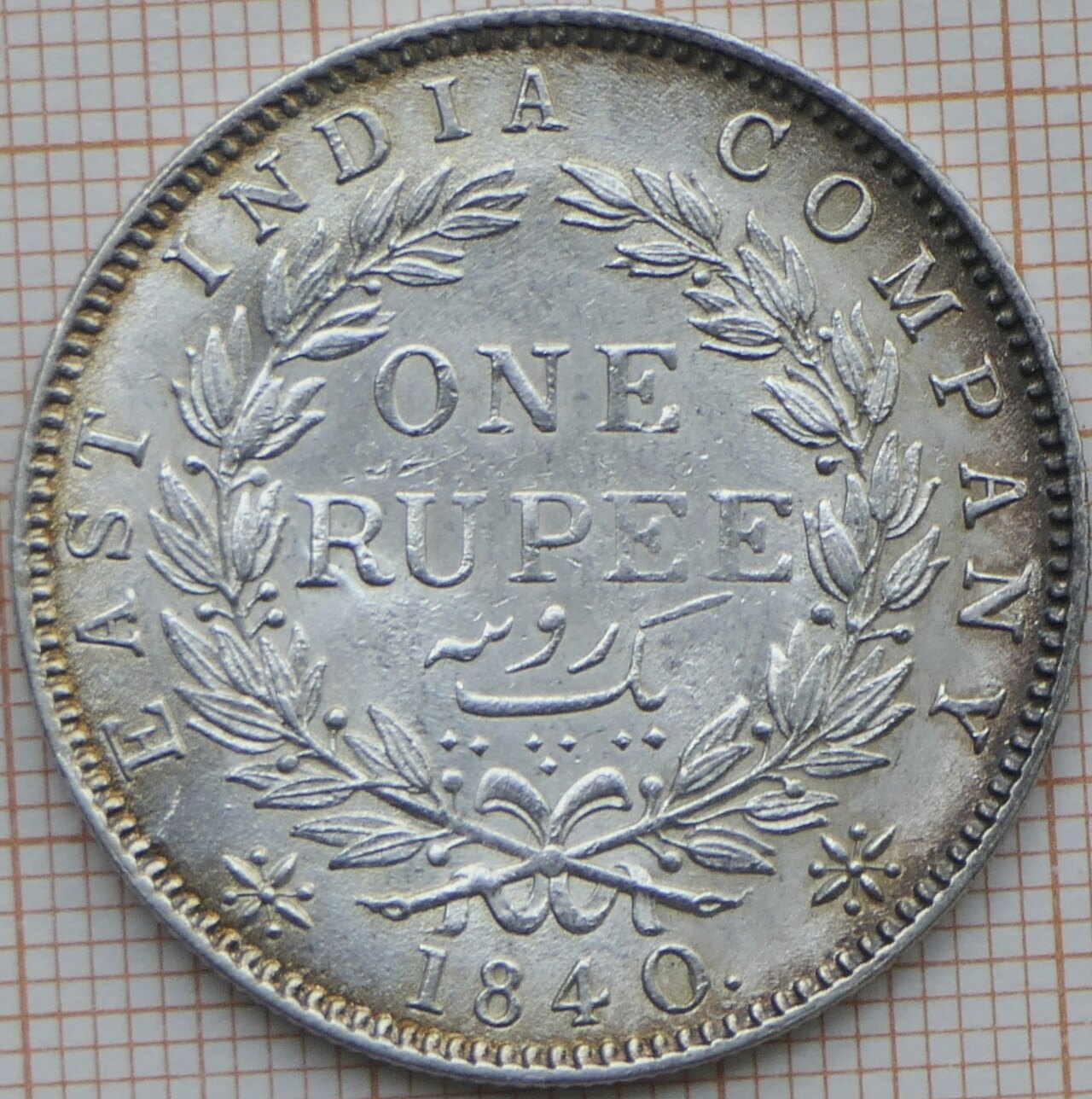

After Indian and Pakistani independence, the Gulf’s currency question remained unsettled. Correspondence preserved by the Qatar Digital Library shows administrators, banks and British representatives discussing which currencies should be used in Bahrain. There was no automatic transition that immediately placed a new national currency in everyone’s hands.

1959: separate notes, the same unit
In 1959, India introduced a special issue for Gulf territories. The notes retained contemporary Indian designs but used different colours and the prefix “Z”. The Reserve Bank of India explains that separating these notes was intended to limit abuses of the mechanism through which rupees returning from the Gulf were converted, at a time of pressure on India’s foreign exchange reserves.
The “Gulf rupee” was therefore not a Bahraini national currency. Indian authorities issued it for a defined circulation area outside India, initially at parity with the Indian rupee. A different colour may seem a small alteration, but it marked a monetary boundary between notes for India’s domestic market and those intended for the Gulf.
This stage lasted only six years in Bahrain before the dinar replaced it. The order of events matters: the dinar’s creation in 1965 preceded India’s June 1966 devaluation. It cannot be explained as a response to that later event.
Qatar Digital Library · Currency in Arab Shaikhdoms, IOR/R/15/2/378 · Reserve Bank of India · Persian Gulf Issues · Reserve Bank of India · Persian Gulf Issues · Deutsche Bundesbank · Bahrain, currency metadata
051965: the dinar enters everyday accounts
The Bahrain Currency Board was established in 1964, during the reign of Isa bin Salman Al Khalifa. The following year, Bahrain adopted the dinar at 10 Gulf rupees to 1 dinar. Its subdivision was the fils, with 1 dinar equal to 1,000 fils. A national monetary unit was therefore in place several years before independence in 1971.
For shopkeepers and households, a new unit meant learning to read prices differently. Ten rupees became one dinar; one rupee became one hundred fils. Smaller numbers did not in themselves mean greater or lesser wealth: the same conversion had to be applied to prices, wages and accounts.
A first family of notes and coins
The initial notes were for ¼, ½, 1, 5 and 10 dinars, accompanied by coins of 1, 5, 10, 25, 50 and 100 fils. Fractions of a dinar mattered: the quarter-dinar note was a practical low denomination in the first family, rather than a curiosity created for collectors. Notes complemented coins rather than replacing every small metal denomination.
The official catalogue shows sailing vessels, the national arms and Currency Board inscriptions on the first ten-dinar note. Maritime life remained visible as the economy changed. National paper money presented innovation through familiar symbols.
Issuing currency and manufacturing it were separate responsibilities. The Currency Board stood behind the issue, while specialist skills supplied engraving, printing and minting. The Royal Mint Museum records Bahrain among the commissions undertaken by Christopher Ironside, best known for British decimal coin designs. A designer’s work could cross national boundaries while each issue retained its own identity.
Deutsche Bundesbank · Bahrain, currency metadata · Central Bank of Bahrain · Currency Issue · Central Bank of Bahrain · First Issue (1965) · Royal Mint Museum · Christopher Ironside
061967: a small note fills a familiar need
The 100-fils note is one of the most revealing objects of the transition. Its placement within the official catalogue’s “First Issue (1965)” could suggest that it was present at the launch. The Currency Board’s annual report gives a more precise account: it was first issued on 2 September 1967.
The report explains the need. A low-value note was wanted to take the place formerly occupied by the one-rupee note. The 1965 conversion had changed the unit without eliminating the material habits of everyday payments. A 100-fils coin already existed, but people could also value the same amount in paper form.
The decree of 14 August 1967 specifies a small note measuring 120 by 56 mm. Sailing dhows and a date grove supplied its imagery, while a falcon-head watermark helped identify it. These choices linked an everyday instrument to familiar landscapes and activities. National imagery belonged to low denominations as well as large ones.
November 1967: a separate decision from sterling
Another decision followed that year. After sterling’s devaluation was announced on 18 November, Bahrain maintained the dinar’s gold parity as fixed in its currency decree. Its sterling equivalent consequently changed from about fifteen shillings to seventeen shillings and sixpence per dinar. The Board’s report preserves the notices and amending legislation.
This gave monetary autonomy practical meaning. The dinar relied on international arrangements and reserves held abroad, but its authorities did not automatically follow every change in the reference currency. Bahrain’s national money already had a distinct history before independence.
Bahrain Currency Board · Annual report 1967–1968, FCO 8/533 (AGDA) · Central Bank of Bahrain · First Issue (1965)
07From independence to the Central Bank
Independence in 1971 did not create a second dinar. The unit introduced in 1965 continued while monetary institutions developed. In 1973, the Bahrain Monetary Agency succeeded the Currency Board and carried out central banking and financial supervisory functions.
The second note family appeared in 1978–1979, comprising ½, 1, 5, 10 and, for the first time, 20 dinars. The quarter-dinar denomination was absent from the new range. The new issuer’s name replaced the Currency Board’s on the paper. Identifying an issue therefore requires more than reading the denomination: the institutional name and designs matter too.
A third family strengthened banknote security in March 1993. The CBB catalogue describes features including an oryx-head watermark and windowed security threads. Its entries also bring together later variants, so a portrait or security feature visible on one reproduction should not automatically be assigned to every note produced since 1993.
The Central Bank of Bahrain was created on 6 September 2006, according to its institutional profile, under the new central banking law. It succeeded the Monetary Agency and inherited its responsibilities. In March 2008, the CBB issued the fourth banknote family. This was another institutional change without a redenomination: amounts remained in dinars and fils.
Central Bank of Bahrain · About CBB · Central Bank of Bahrain · Currency Issue · Central Bank of Bahrain · Second Issue (1979) · Central Bank of Bahrain · Third Issue (1993) · Central Bank of Bahrain · Fourth Issue (2008)
1998: printing did not mean authorisation
In 1998, a fraudulent order placed with an Argentine printer led to unauthorised production of twenty-dinar notes. PMG documents the rapid recall of the purple type, including the recently improved legitimate issue, followed by a peach-coloured replacement. The episode shows why paper and engraving quality were not enough: the issuer’s authorisation was essential to a note’s validity.
08The banknotes: a country in five denominations
The fourth family is a small atlas of Bahrain. Its notes bring together historic buildings, modern infrastructure and reminders of economic transformation. The selected images suggest a maritime society with an architectural heritage and a continuing commitment to education, production and connections.
The table describes designs displayed in the CBB’s fourth issue and upgraded fourth issue. Changes in signatures and security features belong to individual variants; they do not necessarily amount to a new currency family.
| Value | Features to look for | Historical themes |
|---|---|---|
| ½ dinar | Old court building; Bahrain International Circuit | Institutions and international motor racing. |
| 1 dinar | Al-Hedaya Al-Khalifia school; horses and sail-shaped monument | Education, equestrian culture and maritime memory. |
| 5 dinars | Shaikh Isa House and Riffa Fort; first oil well and aluminium industry | Built heritage and the transformation of production. |
| 10 dinars | Hamad bin Isa Al Khalifa’s portrait; Shaikh Isa bin Salman Causeway | The sovereign and connections between the islands. |
| 20 dinars | Hamad bin Isa Al Khalifa’s portrait; Al-Fateh Islamic Centre | National authority and religious architecture. |
The printed date may not be the circulation date
A reference to the 2006 law does not mean that a note was already circulating that year. Similarly, an institution’s founding date need not be the date of its first banknote issue. The official catalogue places the fourth family’s issue in March 2008.
Stronger security, familiar landmarks
Upgrades begun in 2016 and continued in 2017 addressed counterfeit resistance and tactile recognition. The 2016 annual report describes renewed ten- and twenty-dinar notes and work on recognition features for visually impaired users. The 2017 report records the programme’s continuation, including work on the five-dinar note.
Raised printing and tactile marks are reminders that notes need to be read through touch as well as sight. Everyday currency must be quickly recognisable and withstand repeated handling. Technical upgrades can preserve the main images that people already know.
Modern photographs remain available through the official catalogue links below. They are not copied here because republication permission has not been obtained. The descriptions are based on the designs consulted and are not an authentication procedure for an individual note.
Central Bank of Bahrain · Fourth Issue (2008) · Central Bank of Bahrain · Upgraded Fourth Issue · Central Bank of Bahrain · Annual Report 2016, §4.5 · Central Bank of Bahrain · Annual Report 2017, Currency Issue
09The coins: palm tree, dhow and seal
Small coins can be as expressive as high-value notes. They pass between many hands and accompany ordinary purchases. In the series displayed by the CBB, the five- and ten-fils coins show a palm tree; the twenty-five-fils coin a Dilmun seal; the fifty-fils coin a dhow; and the hundred-fils coin the national arms.
These choices form a coherent set: cultivated land, an ancient civilisation, navigation and public authority. They compress a national history into metal. The ancient seal, once used to identify exchanges without being money itself, becomes the image on a coin with a defined face value.
The hundred-fils coin is bimetallic, with a differently coloured centre and outer ring that make it readily distinctive. The CBB gives an outside diameter of 24 mm and a total weight of 6 g. Across the range, size, outline and metal colour also help users distinguish values without relying entirely on the numerals.
Fils and thousandths: reading amounts differently
A dinar has one thousand subdivisions rather than one hundred. One hundred fils is therefore a tenth of a dinar, and five hundred fils is half a dinar. This explains amounts written to three decimal places: 0.250 dinar means 250 fils. It is a feature of the unit system, not evidence that the smallest accounting subdivision must be available as a coin in every series.
The inaugural series included a one-fils coin, whereas the CBB’s contemporary catalogue presents denominations from five to one hundred fils. These are inventories of different generations. They do not by themselves establish how frequently an older piece is used or the legal status of every exceptional issue.
Central Bank of Bahrain · Current Coins · Central Bank of Bahrain · Currency Issue
10Commemoration, collecting and preservation
Money also records events a country chooses to celebrate. The CBB museum lists issues associated with infrastructure, children’s welfare, wildlife and sport. The hundred-fils Formula 1 commemoratives of 2004 and 2014, the latter marking the tenth anniversary, connect a familiar denomination with a particular event.
The catalogue nevertheless brings together different kinds of object: coins, medals, gold ingots and uncut banknote sheets. Those terms are not interchangeable. A commemorative medal can have documentary or artistic value without being a means of payment, and its museum sale price is not a face value.
The 2016 annual report describes three hundred gold ingots, each weighing fifty grams, released on 8 August 2016 to mark the first dinar’s fiftieth anniversary. The anniversary of the 1965 issue fell in 2015; the object’s actual release took place in 2016. Once again, the account needs to be read beyond its headline.
Collectors can examine denomination, issuing authority, scripts, dates, signatures and manufacturing marks. Wear also matters as evidence of a material life, although it cannot establish a coin’s exact travels on its own. A precise attribution requires a precise provenance.
Central Bank of Bahrain · Currency Museum · Central Bank of Bahrain · Annual Report 2016, §4.5
11One continuing unit, many histories
Since 1965, the dinar’s name has outlasted changes in issuer and repeated redesigns. Institutional continuity does not mean that nothing changed. A trading archipelago’s currency became the money of an independent state with a central bank and a developed financial sector.
The dollar link belongs to this history. The CBB describes a peg effectively unchanged since 1980, with an official parity of 0.376 dinar to the dollar. This explains the monetary framework rather than a retail cash exchange price. Nor has this exact arrangement existed unchanged since the dinar’s creation, which took place in a different international monetary environment.
A small coin can therefore open a much larger story: the palm tree points towards the islands’ resources, the dhow towards maritime routes, and the seal towards the administration of exchange in Dilmun. Notes bring schools, industry, bridges and public buildings into the narrative. Together they record the building and maintenance of trust through objects that people can hold in their hands.

Central Bank of Bahrain · Monetary Policy · Central Bank of Bahrain · About CBB · UNESCO · Qal’at al-Bahrain
12Key dates
- c. 2300 BCEEarly occupation recorded at Qal’at al-Bahrain.
- Hellenistic periodTylos within the Gulf’s coin-using networks.
- 1959Indian issue of rupees specifically for Gulf circulation.
- 1964Bahrain Currency Board established.
- October 196510 Gulf rupees become 1 dinar, divided into 1,000 fils.
- 2 September 1967First issue of the hundred-fils note.
- 1971Independence; the dinar continues.
- 1973Bahrain Monetary Agency established.
- 1978–1979Second banknote family, including twenty dinars.
- 1993Third family with renewed security features.
- 2006 / 2008CBB established, followed by the fourth note family.
- 2016–2017Upgrades to the fourth family.
Deutsche Bundesbank · Bahrain, currency metadata · Bahrain Currency Board · Annual report 1967–1968, FCO 8/533 (AGDA) · Central Bank of Bahrain · Currency Issue · Central Bank of Bahrain · Annual Report 2016, §4.5 · Central Bank of Bahrain · Annual Report 2017, Currency Issue
Sources and credits
Research checked on 15 October 2026. Documentary photographs are stored locally and credited beside each image. Regional examples are explicitly identified; no Bahraini provenance is assigned without evidence. The accompanying manifest records licences and excluded images. External sources require a connection, but the article, styling and every illustration can be read offline.
- UNESCO · Qal’at al-Bahrain
- UNESCO · Pearling, Testimony of an Island Economy
- Bahrain Authority for Culture and Antiquities · History of Pearling
- Crawford & Matthews · Seals and Sealings, Dilmun Temple at Saar
- Pierre Lombard · Qal’at al-Bahrain, The Site Museum (2016)
- Bahrain Authority for Culture and Antiquities · History Timeline
- Reserve Bank of India · Persian Gulf Issues
- Reserve Bank of India · Persian Gulf Issues
- Qatar Digital Library · Currency in Arab Shaikhdoms, IOR/R/15/2/378
- Deutsche Bundesbank · Bahrain, currency metadata
- Bahrain Currency Board · Annual report 1967–1968, FCO 8/533 (AGDA)
- Central Bank of Bahrain · Currency Issue
- Central Bank of Bahrain · First Issue (1965)
- Central Bank of Bahrain · Second Issue (1979)
- Central Bank of Bahrain · Third Issue (1993)
- Central Bank of Bahrain · Fourth Issue (2008)
- Central Bank of Bahrain · Upgraded Fourth Issue
- Central Bank of Bahrain · Current Coins
- Central Bank of Bahrain · About CBB
- Central Bank of Bahrain · Monetary Policy
- Central Bank of Bahrain · Currency Museum
- Royal Mint Museum · Christopher Ironside
- Central Bank of Bahrain · Annual Report 2016, §4.5
- Central Bank of Bahrain · Annual Report 2017, Currency Issue
- PMG · Bahrain Complete Set, 2022
Image and licence manifest · Editorial production notes (French)